- Cryptopolitan
- Posts
- ⚔️ JPMorgan vs Crypto: The Gloves Are Off
⚔️ JPMorgan vs Crypto: The Gloves Are Off
PLUS: MSCI’s delisting threat shakes Bitcoin treasuries, markets unwind leverage, ECB flags stablecoins, and Vitalik calls out X’s new privacy risk.

Cryptopolitan News
November 24, 2025 • Estimated Reading Time: 3 minutes

SACHI is a free-to-play, immersive gaming universe that combines next-gen gameplay with real social connection and rewarding experiences. Step into living worlds where players compete, create, and connect - shaping a new era of entertainment built around community, play, and real rewards.
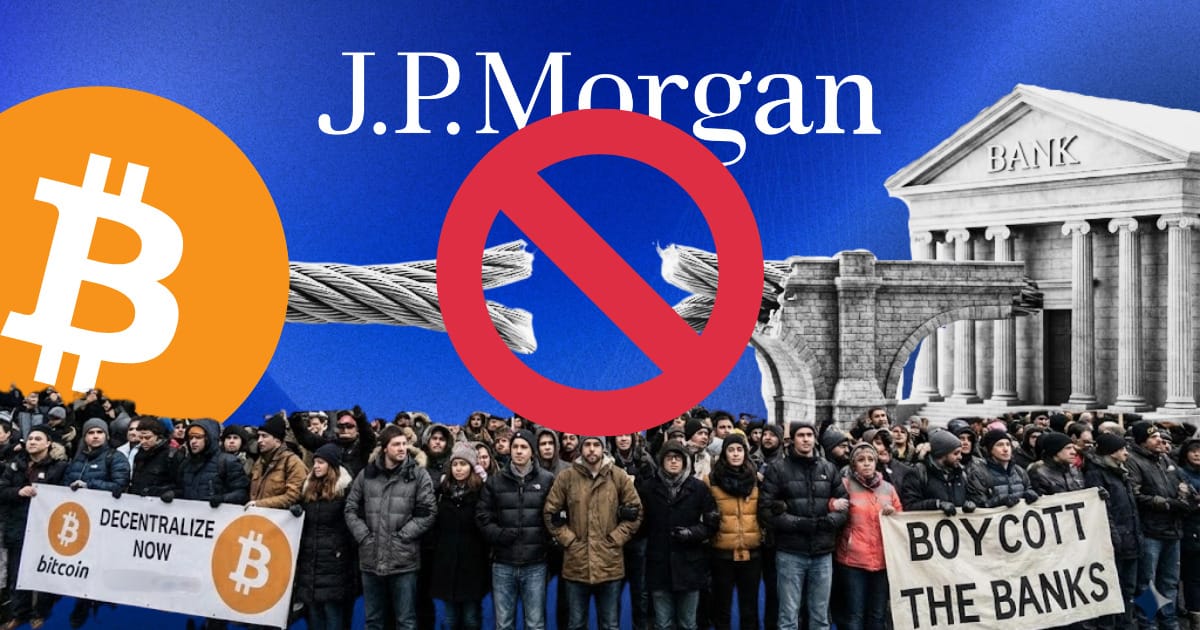
Crypto’s Black Friday wasn’t just in the charts, it was in the banking system too.
The Bitcoin space exploded this weekend following a leaked memo revealing that MSCI is contemplating removing crypto-treasury firms (Strategy included) from its indices effective January 2026, as first shared in a JPMorgan research note.
That was enough to ignite an online firestorm among Bitcoiners and calls for a full-fledged JPMorgan boycott.
Why? Because MSCI is not your typical index-maker. It’s the index-maker.
A delisting would flush out passive funds and ETFs, pensions, and allocators forced to liquidate disqualified stocks… generating actual sell pressure – and thus decreasing liquidity – for companies whose balance sheets skew heavily toward Bitcoin.
Advocates for strategy characterized it as an existential threat.
Bitcoiners had another name for it: “Choke Point in a suit and tie.”
I couldn’t even get $20 million out.
That anger hit boiling point after Strike CEO Jack Mallers published details last week about JPMorgan closing all his company’s accounts in September with nothing more than boilerplate letter citing “concerning activity.” His father, a 30-year private client was also removed.
Whenever he asked why, he received the same answer:
“We can’t tell you.”
Even after Trump issued an executive order that forbade banks from shutting down crypto activity, Jack’s closure reignited simmering fears that banks have been secretly enforcing a shadow ban on crypto founders and executives as well as their adjacent industries under the auspices of compliance.
MSCI’s proposal escalates everything
Under MSCI’s draft rule:
Companies with >50% of their balance sheet in crypto would be and will continue to get the boot from its indexes.
Those firms now have two options left:
Sell down positions to become eligible for the index again, or
Be willing to lose billions of dollars in passive capital — permanently.
For a company like Strategy which was added to the Nasdaq 100 a year ago this is nothing short of an existential threat.
The bigger picture: A banking system still not sold on crypto
Whether Jack Mallers was shutdown and JPMorgan’s involvement in spreading the MSCI news has reawakened the crypto industry’s greatest fear:
That Operation Chokepoint didn’t really end, it just changed its clothes.
As one analyst put it:
“This isn’t regulation. This is economic gatekeeping.”
And for once, the battle is public: with JP Morgan in its crosshairs.
POLL: Do you think big banks are quietly re-starting “Choke Point” against crypto? |
📊 Market Watch

1️⃣ BTC Derivatives hit a 6-month low
Leverage has completely vanished. Open interest on CME is back to April levels, longs are wiped, and fear is still rising. BTC is stuck in the $80K–$90K trap with shorts quietly rebuilding.
2️⃣ The U.S. is adding $6.5B of debt… every single day
DOGE was supposed to save $1–$2T.
Reality: it saved $160B–$214B, then got shut down, while America added $2.1T in new debt anyway.
3️⃣ Standard Chartered says RWAs hit $2T by 2028
Tokenized assets could explode from $35B → $2T, with MMFs and equities each contributing $750B. Regulations in the EU, UK, Singapore are accelerating the shift, while the U.S. risks stalling.

👀 Are You Watching?

The ECB dropped a fresh warning: stablecoins are now a global financial-stability risk, not because they’re breaking things today, but because they’re growing fast enough to break things tomorrow.
🐤 Top Tweets
Here are Cryptopolitan’s top picks:
🎭 Culture Watch

X’s latest feature is sparking an epic backlash and Vitalik Buterin is fanning the flames. He says the update might appear innocent, but it violates one of crypto’s most tenacious rules: privacy.
For a lot of users: activists, journalists, dissidents and anyone who cares about their privacy, a forced location label isn’t context, it’s snitching. Critics argue that it facilitates the targeting of ethical users and that sophisticated bad actors will just fake their locations anyway.
But Vitalik admits that it may work as a means of providing short-term clarity within international debate. But he warns that without real protections, it turns meaningless quickly:
Propagandists can fake their origins, attackers can pose as locals, and endangered users can be exposed.
His bigger message:
Platforms should have more infrastructure than crude “show your country” tags. They need spoof-resistant, privacy-friendly identity tools, not ones that put people under pressure to disclose personal details.
The conflict underscores a growing gulf between huge platforms that are pressing for greater transparency with users and the crypto world, which is pushing back in its zeal to preserve personal privacy.
POLL: Do you support X's move to show account origin? |
Monday headline picks

Join the Conversation!
We'd love to hear your thoughts and comments. Join our community and stay updated with the latest trends and discussions in crypto.
Twitter | Instagram | Telegram Channel | Linkedin | Facebook
