- Cryptopolitan
- Posts
- 🔄 Did Bitcoin just decouple from M2?
🔄 Did Bitcoin just decouple from M2?
Why Bitcoin decoupled from M2, stablecoins hit $310B, memecoins crack, AI enters Fed models, and capital quietly reroutes across global markets

Cryptopolitan News
December 24, 2025 • Estimated Reading Time: 4 minutes


For more than a decade, one macro indicator has fallen in line with Bitcoin’s rise: M2 money supply.
With more money moving through the system, capital was chasing scarce, hard assets like BTC. But that relationship fractured in 2025.
BTC underperformed even as global M2 exploded from $104 trillion → $115 trillion-
A gain of more than $10 trillion in liquid cash.
The kind of setup that previously sent Bitcoin to new highs.
Even then BTC is ending the year flat, lagging behind gold & silver and even equities.
🤔 Quick explainer: What is M2 and why did It matter?

M2 = cash, checking deposits, savings accounts and money market securities.
It’s the lifeblood of liquidity.
For years, BTC bulls relied on a fairly straightforward storyline:
When M2 goes up, so does Bitcoin with a usual 3-6 months delay.
That pattern worked in:
2020 pandemic stimulus → BTC at $69KA mix of economic theory, something something “stimulus”
Early 2021 growth → BTC to $64K
Mid-2023 China easing → BTC surged
But this time, no rally.
BTC topped out at $126K in October and has not been able to reclaim that terrtiory.
So, what happened?
Narratives changed and options increased
The 2025 expansion in M2 did happen, but the new capital had options:
AI stocks soaked up speculative flows
Precious metals regained safe haven status
Institutional sentiment around BTC remained cautious
U.S. and Chinese liquidity didn’t filter into crypto
Even U.S. M2 rose from $21.4T to $22.5T, and China’s M2 surged 8% (¥311T → ¥336T). But neither translated into spot BTC demand.
BTC 2025: Institutions sold but no retail FOMO
Rather than mimic M2, Bitcoin was subjected to organized sell-offs with every local high.
Institutions were using BTC as a resource of liquidity, not an object for collateral.
ETFs had inflows, which slowed and turned into outflows
There was no retailer wave, even after it became structurally easier to do so
The bull thesis was there. But the conviction wasn’t.
Can BTC catch up?

Some appear to be betting that this is merely a delay, and that a “catch-up rally” is in the works.
What If BTC Revisits M2: Many models point to price targets of $220K (or higher) within the next 12–18 months if BTC trends back towards M2.
It’s all about the timing and flow of money.
M2 is increasing - yes. But will the liquidity flow back towards BTC or not?
Given the cyclical nature of investment and observing how smart money rotates capital from one asset on other, there's a chance that BTC is able to capture the liquidity.
The quantum discussion happening recently is alos keeping big money a bit hesitant, and seeing how other chains like ETH and SOL are dealing with it, smart money may be inclined to diversify a bit.
🧠 Cryptopolitan’s take
M2 still matters. But it’s not enough.
You need to know:
1. Where the money is flowing
2. What assets dominate attention
3. When macro + crypto cycles collide
And if the tide of capital shifts, BTC could rally again.
Poll: Is Bitcoin gearing up for its M2 catch-up rally? |

📊 Market Watch

🐳 Memecoin whale exodus spooks speculators
One of Pump token holder dumped their entire $19.5M PUMP stack for a mere $7.3M, a brutal 62% loss. The capitulation suggests further fractures within the memecoin market, with ENA whales dumping for heavy losses.
Across the board, capital is bleeding out of high-FDV and narrative-driven tokens.
🧠 Bitcoin’s $126K ATH didn’t actually break $100K
Alex Thorn of Galaxy pointed out that BTC’s inflation adjusted high in October only hit $99,848. This underscores the extent to which the dollar has lost purchasing power since the pandemic.
CPI inflation is cooling, but not fast enough to rebuild confidence. Meanwhile, Peter Schiff doubled down, claiming gold will rise and BTC won’t, even in a historic inflation cycle.
🤖 The Fed now models AI in rate decisions
The Federal Reserve is officially looking into how A.I. might change productivity, employment and inflation. Studies and modeling even say workers’ output could 3–4x over decades, even as job displacement accelerates.
Jerome Powell and Philip Jefferson imply that AI may eventually match the steam engine or internet’s economic impact. The Fed’s next-generation models may have to account for a world in which generative AI fundamentally changes growth, wage pressure and the path of interest rates.
👀 Chart our analyst is watching
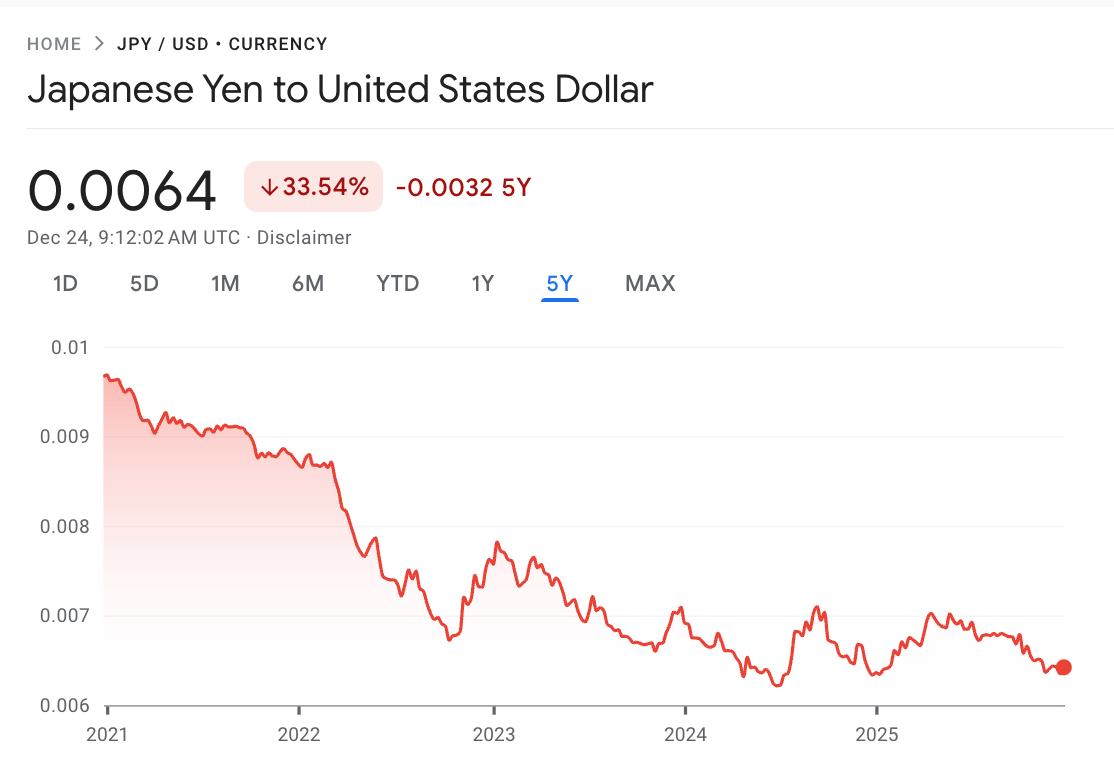
Having just hit an 11-month low, Japan’s yen inspired a warning from Finance Minister Katayama of “bold action.” Traders forecasted tighter monetary policy following December’s rate hike, and then dovish signals that sank the yen.
A weak yen is used to boost exports. But in 2025, it’s fueling inflation, straining households, and testing Prime Minister Takaichi’s agenda. Intervention could come any day, likely near the 160 level.
If Japan moves, expect fireworks. Similar moves last year led to 4–5 yen swings over a matter of hours. But temporary currency ops are nothing more than band-aids: the longer-term pressures on the yen have yet to be dealt with.
🐥 Top tweets
Here are Cryptopolitan’s top picks:
🚀 Calls of the future

According to local economist Asdrúbal Oliveros, Venezuela gets something like 80% of its crude oil revenue in USDT.
Under American sanctions, the country has turned to stablecoins as a way to settle its oil trades and production rose to around one million barrels daily. In sections of the oil economy, USDT replaced the traditional banking rails.
But there’s a catch. Venezuela has difficulty selling these stablecoins due to controls and enforcement risk creating FX gridlock, as well as domestic pressure.
It is in effect a live case study of how stablecoins can keep commodity trade moving when the traditional system closes its doors.
Headline picks by our Head of Ops

USD1 increased its supply after Binance launched yield-based rewards for the stablecoin
Bitmine’s Ethereum stash hits 4.066 million as total crypto + cash vault tops $13.2 billion
Buying pressure weakens across crypto market and on-chain data
Circle, Figure, Ripple lead payment businesses to record funding year
Meme of the day

Join the Conversation!
We'd love to hear your thoughts and comments. Join our community and stay updated with the latest trends and discussions in crypto.
Twitter | Instagram | Telegram Channel | Linkedin | Facebook