- Cryptopolitan
- Posts
- 🔍 Cycle one of the Iran war just ended.
🔍 Cycle one of the Iran war just ended.
PLUS: The ceasefire sent crypto flying. Fear is still at 12.

Cryptopolitan News
April 08, 2026 • Estimated Reading Time: 11 minutes

Cycle one of the Iran war just ended. Here’s what has changed in the past 48 hours.
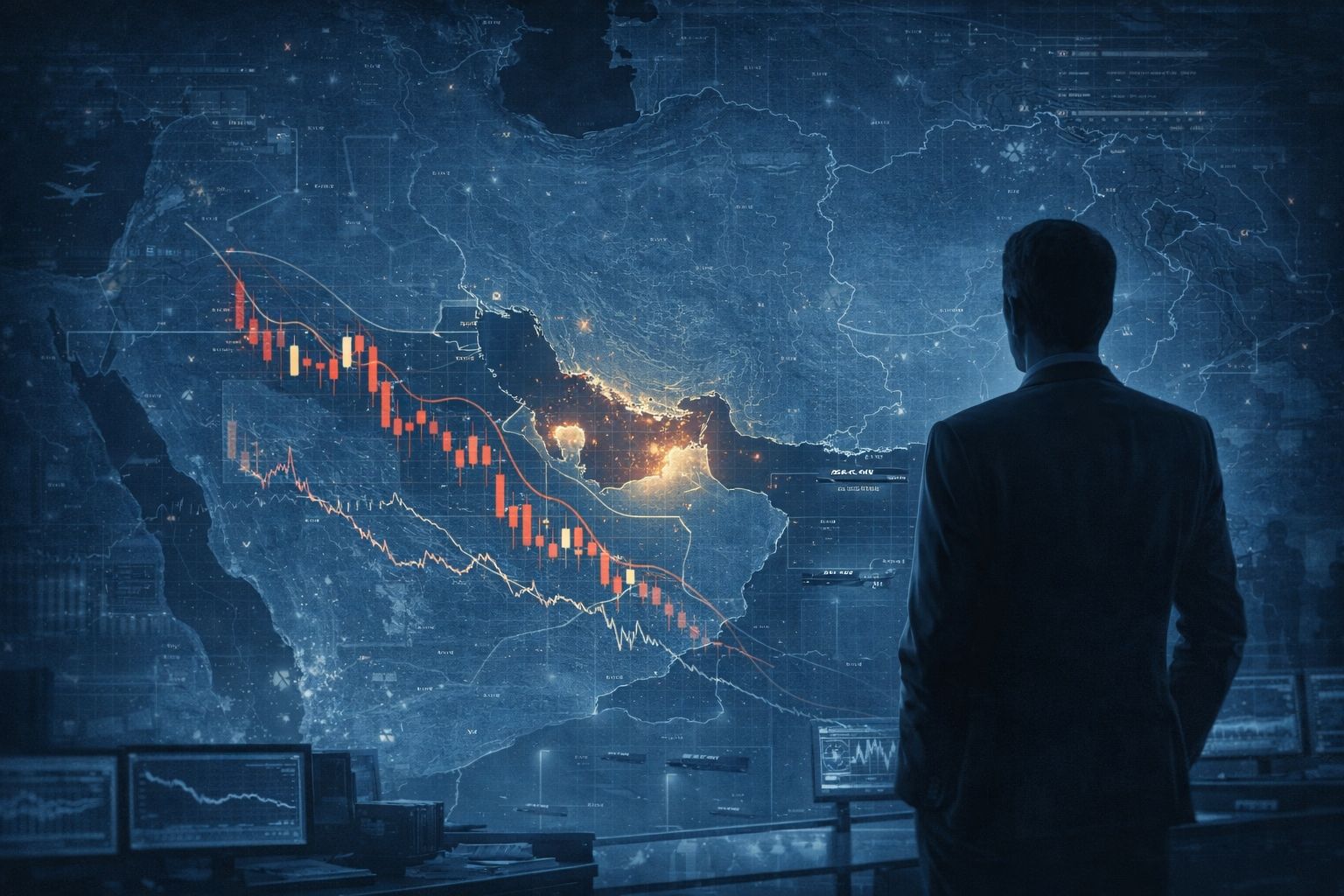
Trump wrote on Truth Social Tuesday morning that “a whole civilization will die tonight, never to be brought back again.” Markets sold off. Oil hit $115 a barrel. Bitcoin slid back to $68,000. The world braced for what appeared to be the most dramatic escalation of the US-Iran conflict since it first began on Feb. 28.
By Tuesday night, it was done. At least for now.
As a last-minute mediator, none other than Pakistan’s Prime Minister Shehbaz Sharif stepped up with a proposal for a two-week ceasefire in exchange for Iran amending the closure of the Strait of Hormuz.
With less than two hours until the hard deadline Trump set of 8pm ET, he accepted the proposal. Minutes later, Iran’s foreign minister confirmed acceptance. The Strait, through which about 20 percent of the world’s oil and gas typically passes, would reopen for coordinated passage. All sides declared victory.
Oil plunged more than 13 percent on the news. WTI crude declined to about $95 a barrel from a wartime peak of just under $115. Bitcoin jumped to $72,700, causing almost half a billion dollars in crypto liquidations: most of which were shorts trapped on the wrong side of one of the fiercest short squeezes since early March.
The Fear and Greed Index was at 8 heading into Tuesday. It had been under 10 throughout the conflict.
What really matters now is what does this two weeks actually mean.
Trump made it clear this is a pause, not a peace. The two-week period is intended to finalize a wider deal, with the first day of peace talks taking place on Friday in Islamabad, where Vice President Vance led the U.S. delegation. Iran’s proposal details 10 points, including a US withdrawal of troops from the region, sanctions relief, the right to continue uranium enrichment and compensation for damages caused by war.
The United States will almost certainly not accept all those terms. Iran’s Supreme National Security Council cast the cease-fire as a victory while also making clear that it still controlled Hormuz.
How exactly the Strait would be reopened is murky. Passage would be possible “through coordination with Iran’s Armed Forces and due attention to the technical limits,” said Iran’s foreign minister.
An estimated backlog of some 1,500 ships are off the coasts of Oman and the UAE awaiting movement. It will take time to get that traffic through. Oil prices dropped sharply on the news but were still well above levels before the war.
The nuclear issue is also unresolved. When the war broke out in February, Trump stated that one of the key goals was preventing Iran from ever getting a nuclear weapon. Iran has vowed that it will not end uranium enrichment. Israel which agreed to the ceasefire, but said it does not apply to Lebanon has stated it supports “ensuring Iran no longer poses a nuclear or missile threat.” These positions he cannot put together in two weeks.
For markets, the ceasefire clears away the most significant headwind of the last six weeks. The war had overturned the Fed’s rate cut calculus almost completely. The oil-fueled inflation risk had brought rate hike prospects to the table for the first time in years.
But a durable cease-fire alters that picture fundamentally. Bitcoin trading around $72,700 puts it at the upper end of the $65,000 to $73,000 range that has capped every rally dating back to February. Whether that will reverse those couple of weeks depends solely on whether a couple of weeks becomes more.
The ceasefire is fragile. The terms are contested. The nuclear issue is unresolved. And Trump has already delayed deadlines on this conflict four times. But now for the first time since late February, the single largest variable hanging over every risk asset on Earth has shifted from escalation to negotiation.
That is not nothing.
POLL: The US-Iran ceasefire is two weeks. What happens next? |
We are building the next version of this newsletter around you.
What do you actually want more of? What is missing? What would make you open this every single morning without thinking twice?
It takes two minutes. One winner gets $250 in USDC, chosen at random from everyone who completes it.
Your answers shape what this becomes. We read every response.
📊 Market Watch

1️⃣ The ceasefire sent crypto flying. Fear is still at 12.
The markets moved as soon as Trump posted. Bitcoin hit $70,786, up 2.3%. Solana led with 4%. Overall liquidations were of $423 million, predominantly shorts.
Oil dropped 9%. The Fear and Greed Index, however, stayed at 12, firmly in extreme fear. Bitcoin dominance climbed to 58.74%. The institutions aren’t rushing back in. This was a squeeze, not a conviction rally.
2️⃣ No clarity, Coinbase adds. The flows say something else.
Coinbase Institutional's Q2 outlook is a deliberate non-call. Cash holdings among fund managers rose nearly a full point to 4.3% in a single month, the fastest flight to cash in five years.
But behind that caution, Bitcoin ETFs logged inflows of $471 million just on April 6, their biggest day in six weeks. BlackRock IBIT was first at $181.9 million. ETFs increased share of the pie from 24% to 39% in the last year.
And Morgan Stanley’s Bitcoin ETF is launched today, the first major American bank to issue one itself rather than serving as a distributor of a third-party product.
3️⃣ Polymarket will be generating $54M a year from money that just sits there.
Polymarket is completely replacing its bridged USDC with a “native” stablecoin called Polymarket USD, which will be backed 1:1 by Circle. What that unlocks is the real story.
About $1.25 billion is sitting unused in user wallets on the platform. By controlling the collateral layer, Polymarket earns yield on those deposits, to the tune of about $54 million a year at current rates, in addition to the $126 million it already makes in fees. One caveat: the CLARITY Act currently prohibits Polymarket from sharing any of that yield with its users.
Aligned Layer is building the verification and interoperability infrastructure for Ethereum, the backend layer that wallets, rollups, and enterprises plug into. Their sale is coming and registration is open today.
Early participants earn XP through missions that are live now. Follow on X, engage with posts, refer friends. Points accumulate before the sale opens.
The readers who register first are the ones who set their position before the crowd arrives.
🐥 Top tweets
Here are Cryptopolitan’s top picks:
Are you watching this?

The Magnificent Seven just collectively lost $1.1 trillion in market value. People at Nvidia, Apple, Alphabet, Microsoft and Amazon sold more stock than they bought to the tune of a net $16.1 billion over the last two years. Insiders at Amazon alone sold $10.93 billion worth of stock. Nvidia insiders sold $4.11 billion. There were no insider purchases of Nvidia, Apple or Amazon.
That's not a comforting portrait.
But Goldman Sachs strategist Peter Oppenheimer offered a contrary argument this week. Tech stocks are now cheaper, relative to expected earnings growth, than the global market average. For the first time in years, the sector isn’t costly relative to what it’s expected to earn. The Iran war provided jittery investors a reason to offload shares that had already gotten bracingly expensive. They took it.
Their underlying business remains intact. AI adoption is accelerating. Earnings expectations remain intact. And the history of infrastructure buildouts, railroads and the internet suggest that the biggest winners are seldom the companies making all those capital outlays. They are the ones who come in after a place has settled and use what was created.
The trillion-dollar behemoths need not solve the conflict. They just need to outlast it. In six months, this quarter may already seem like a footnote.
Headline picks by our Intern

Meme of the day
Join the Conversation!
We'd love to hear your thoughts and comments. Join our community and stay updated with the latest trends and discussions in crypto.
Twitter | Instagram | Telegram Channel | Linkedin | Facebook